
How This Got Made: Tonkotsu-Shoyu Ramen by d.
My good Aussie friend David (I’ll make him cool by calling him d., cuz I’m good like that), who used to live in Japan and is married to a Japanese, loves ramen. In particular, he loves Hakata-style Tonkotsu ramen. Previously, he’s made Hakata-style ramen from scratch (perhaps not 100% but near enough), but this time he went for a hybrid style ramen. This New Year’s Ramen (don’t get it twisted, the Japanese tradition is to eat soba during this period) was a request from a friend’s 10 or 11-year-old daughter. It’s nice that we live in a multicultural time when kids ask for dishes that were considered exotic in certain circles just a few years ago. Anyway, d. decided on a Tonkotsu-shoyu based ramen. The pure Tonkotsu (pork bone) based ramen originated in Fukuoka outside of Hakata in a place called Kurume, supposedly after the ramen chef accidentally left the pot of pork bones and soup on the burner overnight. He awoke to find a dense, milky, and hyper porky broth and tada! Hakata-style ramen was born. This is probably apocryphal but who cares, good story.
Straight-up Tonkotsu ramen might seem easier to make than a Tonkotsu-shoyu but in a way it requires more finesse and attention than a blend. Pork is fickle and instead of umami you can turn one wrong corner and get a pot of pig stank. And while some swear by Tonkotsu ramen, others prefer to have the porky-ness cut with the salty umami of soy sauce. The fact is shoyu ramen is a misnomer in that the soup is never made from soy sauce. That would just produce lifeless soy saucey water. There’s always a base soup, whether that be chicken (the original ramen style known as Chuka (Chinese)-soba is usually chicken-based. There are also seafood based soups and various blends of chicken, pork, kombu, etc. I know little to nothing about vegetarian ramen, so I will say nothing. The shoyu in any shoyu ramen comes from an extremely concentrate of thick soy sauce called tare. A spoonful of this potent high-blood pressure flavor bomb is enough to turn your ramen into whatever variant of shoyu ramen you want.
Anyway, Tonkotsu-shoyu is a legitimate style of ramen and I’m not sure it originated here, but its most famous version is from Asahikawa on Japan’s northernmost island Hokkaido. In other words, as far from Kyushu as you can get. Besides adding soy sauce and different toppings, Asahikawa ramen uses wavy egg-noodles, while Hakata ramen uses eggless thinner straight noodles. By the way, if you’re thinking, wait, Hokkaido or more accurately, Sapporo, is known for Miso ramen, you are correct. Hokkaido’s capital is known for its Miso ramen. As Hokkaido’s second largest city, Asahikawa and its Tonkotsu ramen is a rival of sorts. Hakodate, the port city on the southern sticking out leg part of Hokkaido and the island’s third largest city, is unsurprisingly known for its Shio ramen. Which translates as salt ramen but is more accurately a seafood-based ramen. Shio is a popular flavor designation in Japan that might strike foreigners as strange, but what it really implies is that something was flavored with a stock that is not based on soy sauce or miso. Please don’t think you’re just getting noodles in salty soup. If you like a lighter style of ramen or have found the bouts of post-ramen diarrhea a bit much, Shio ramen might be your go to. My non-evidence based guess is that its delicate flavor profile makes it easy to fuck up and thus it is less common than other styles that are more forgiving.
Let’s get back to d.’s ramen. All-in-all it took about two days and involved making chashu pork (Chinese rolled up pork), a veggie and pork bone soup, lots of boiling and skimming, making nitamago/ajitsuketamago or soy sauce infused soft-boiled eggs, and patience.
The following are d.’s pics and his short explanation of each step:
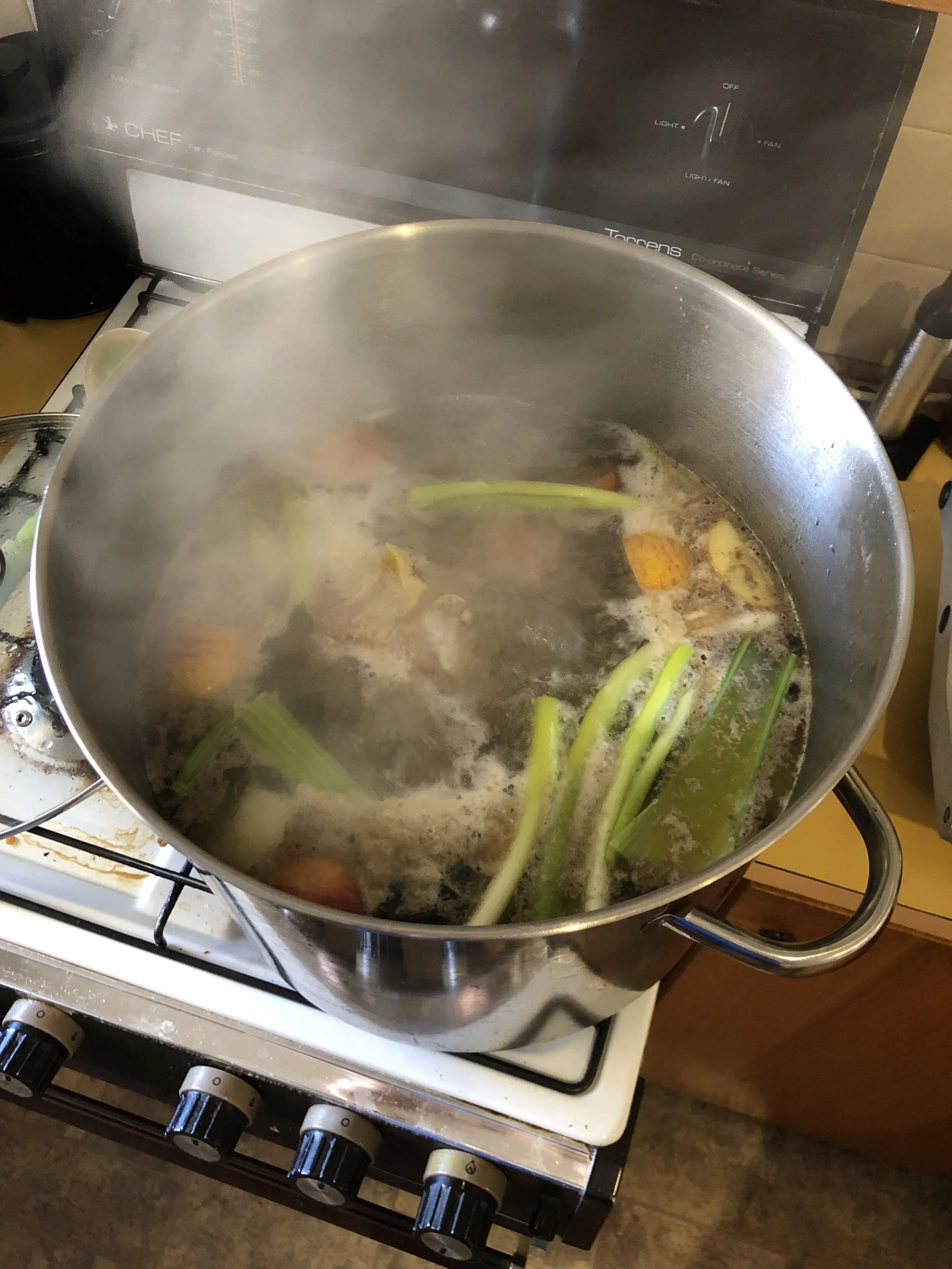
Aromatics in and now for at least a 4-hour boil before I check.
Few hours in… Smells good…
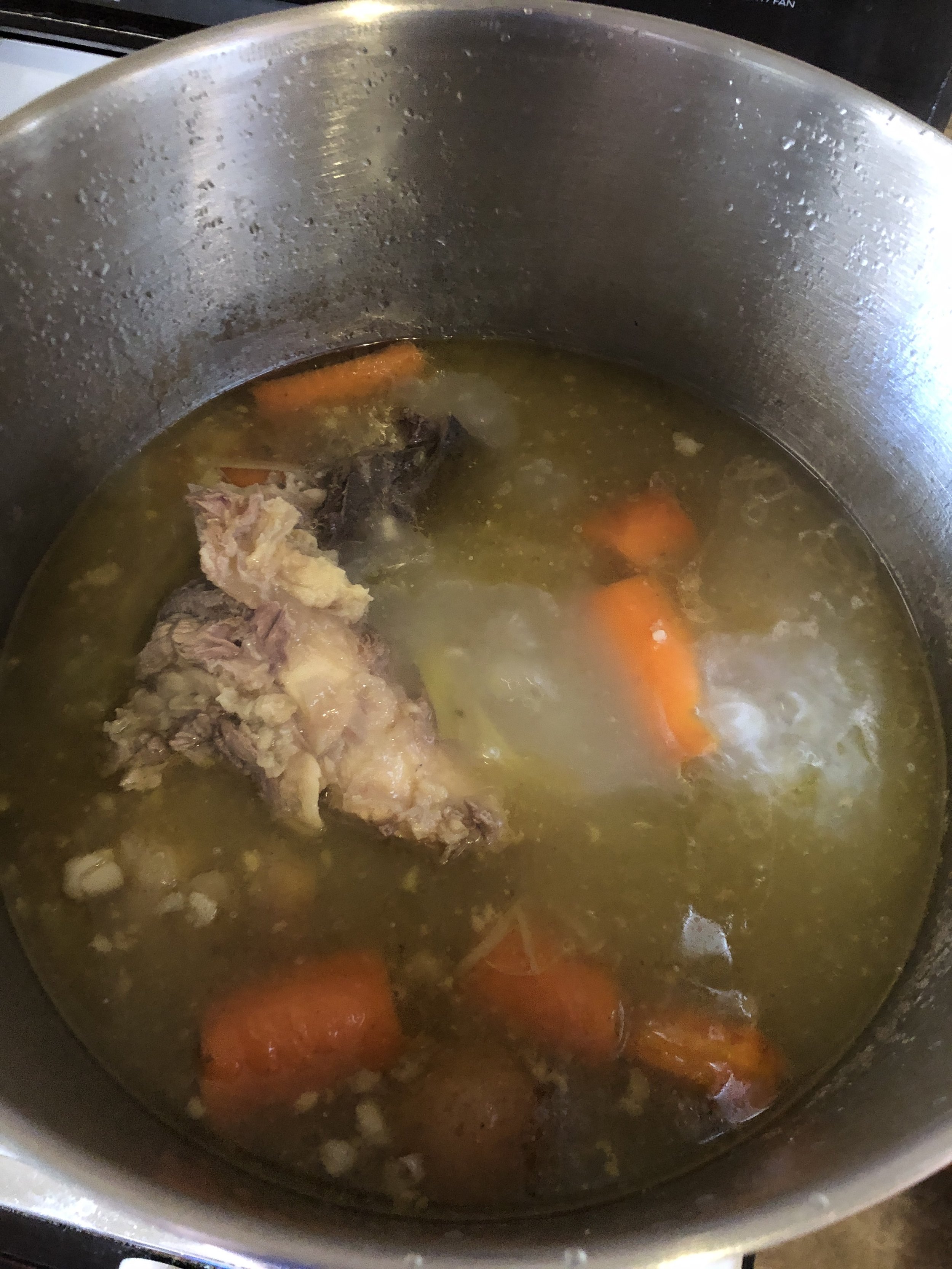
Coming along
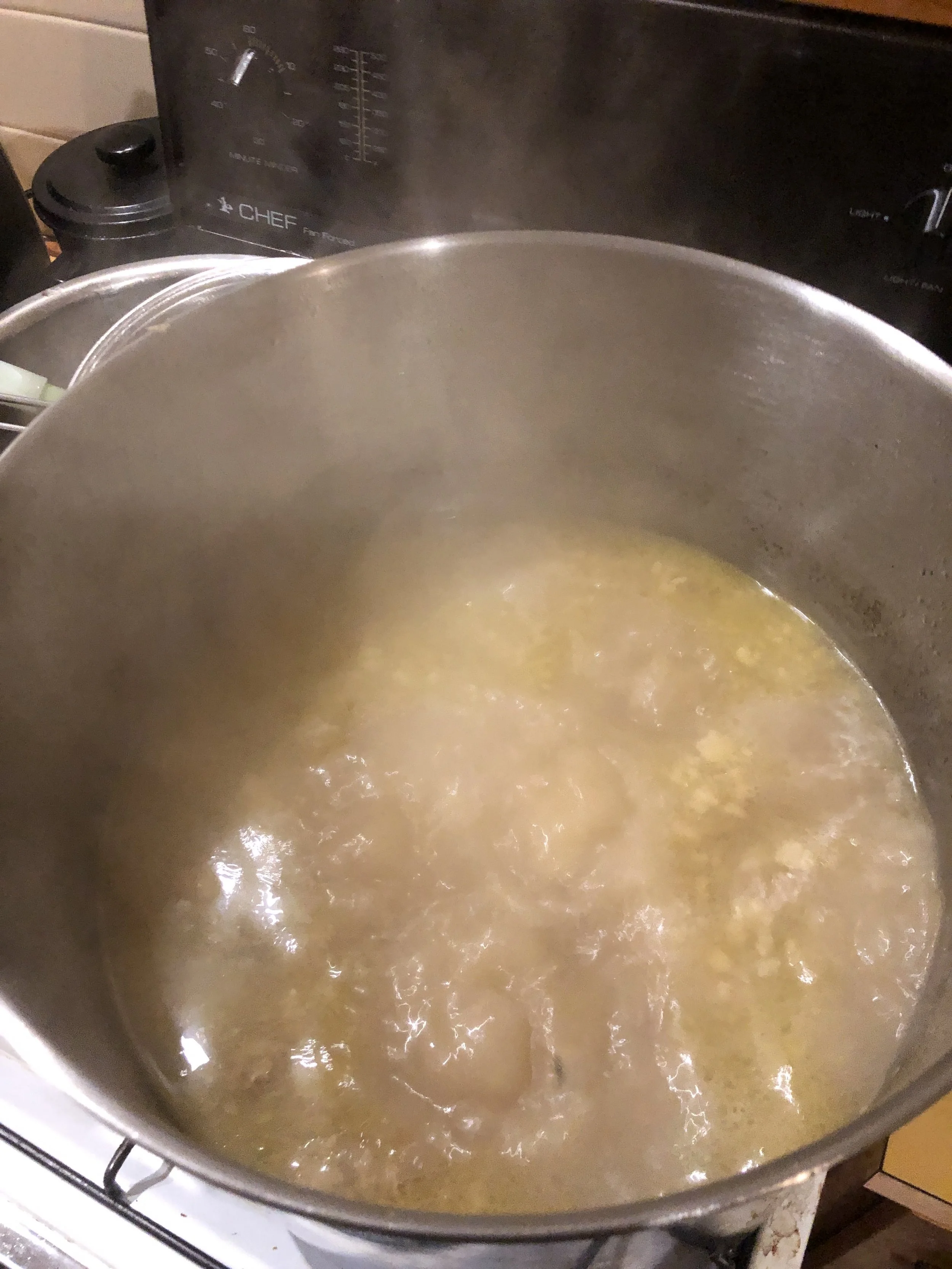
5 hours
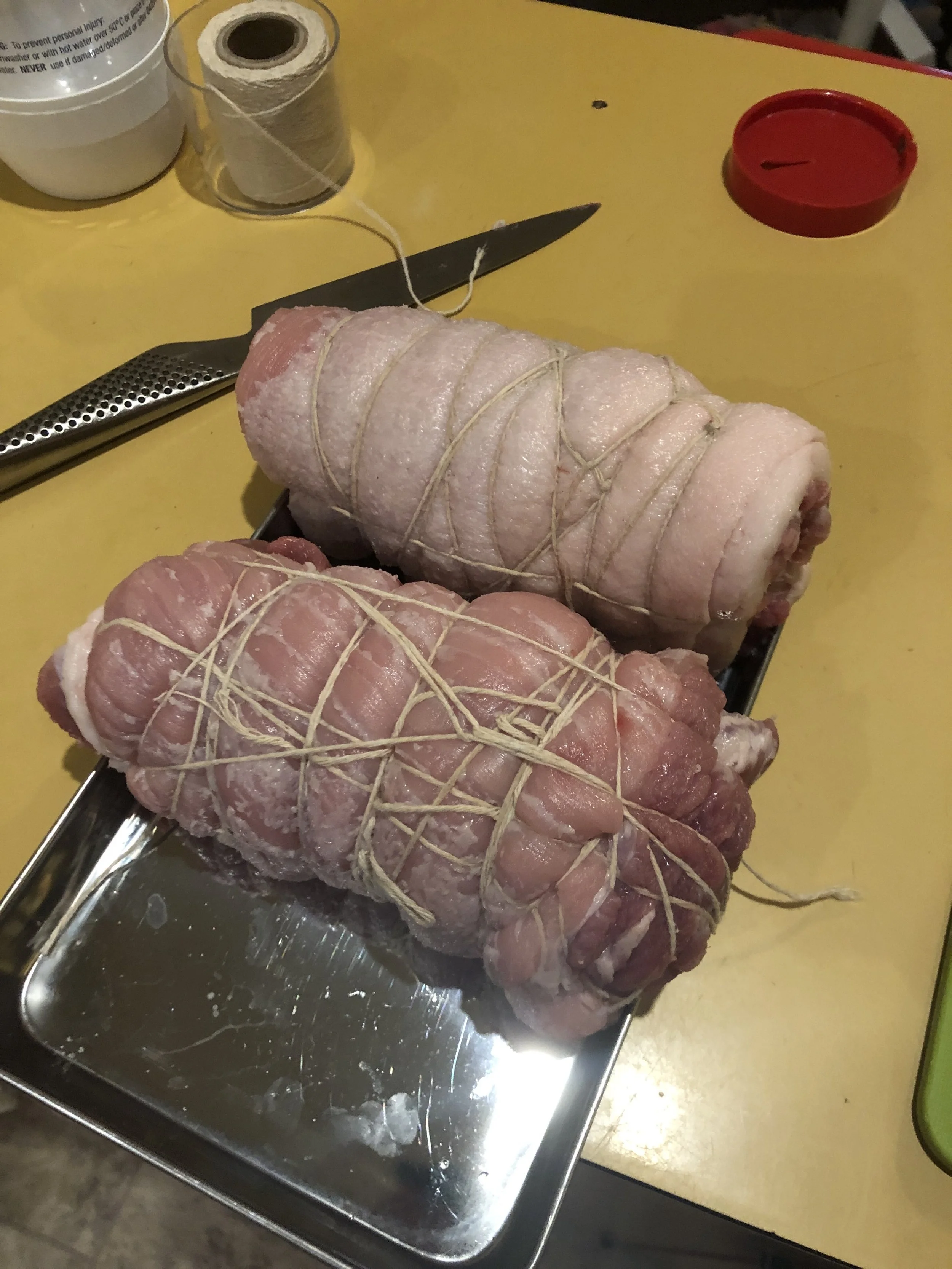
Tied and ready.
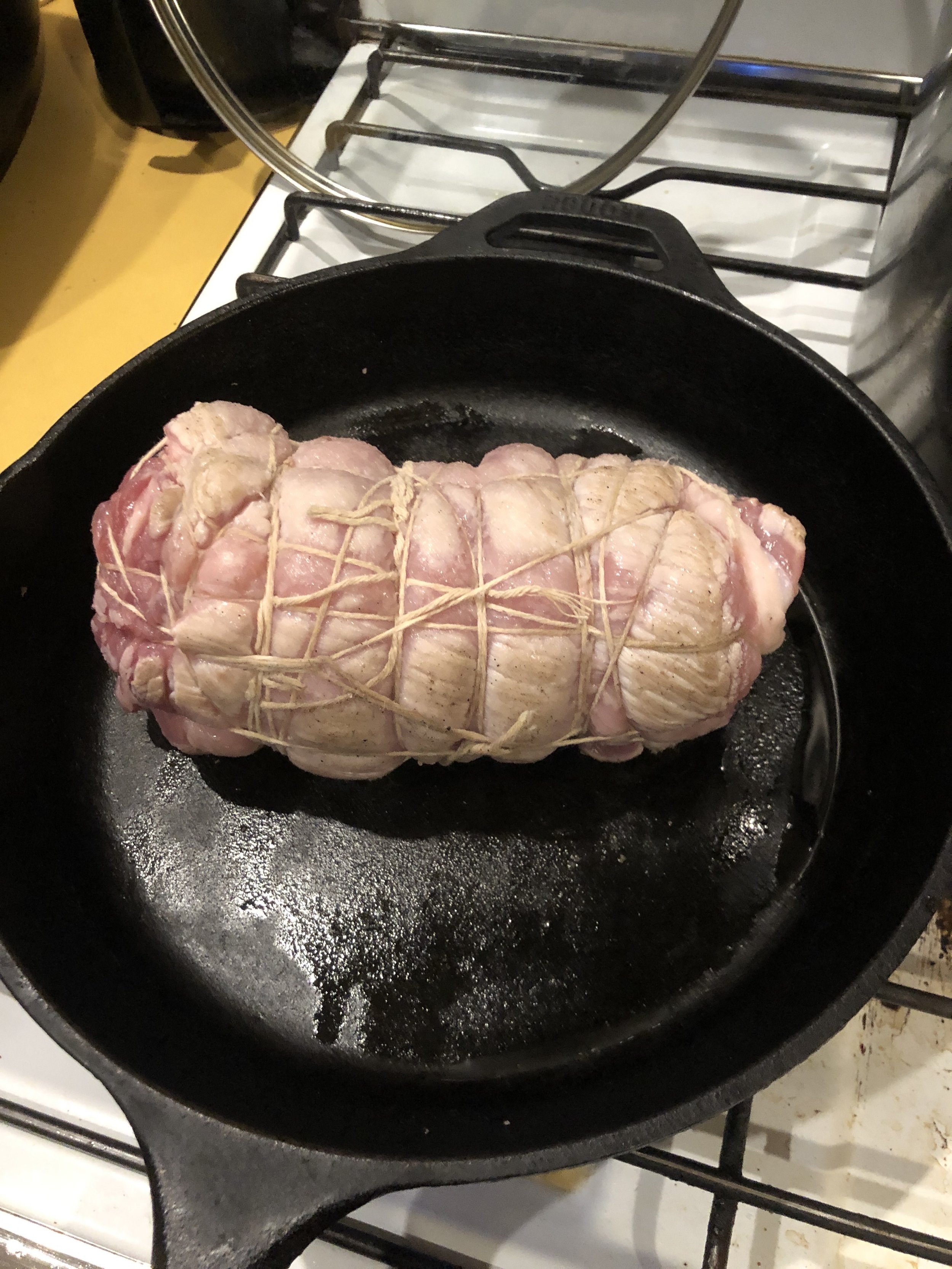
Sealing the meat
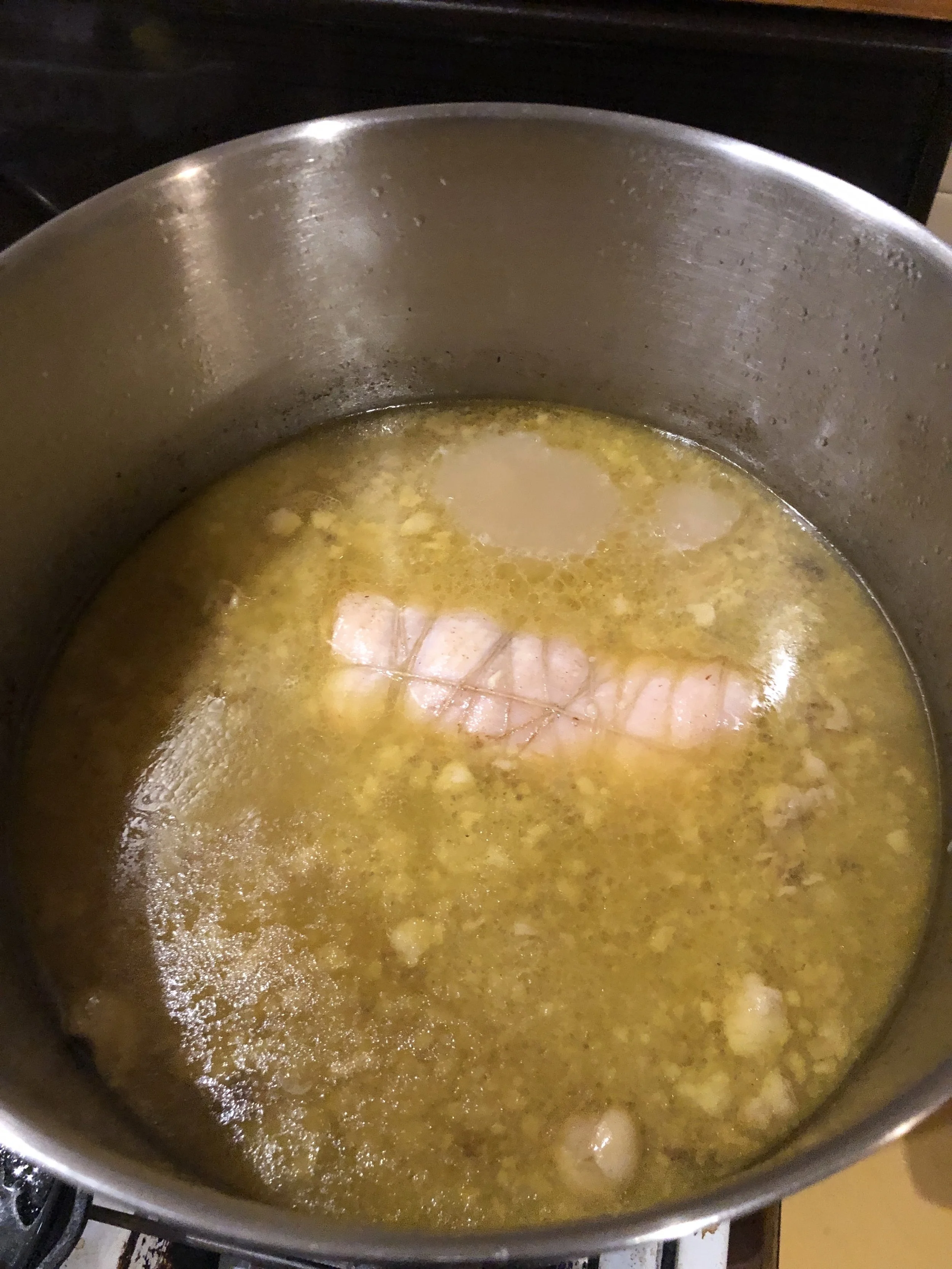
Sealed and in the soup
If you’re wondering, the yellow is from the carrot. I left it in for quite a while… [wasn’t really wondering but good to know]

Filtered soup after going all night. So I think total 15 hours on the simmer.
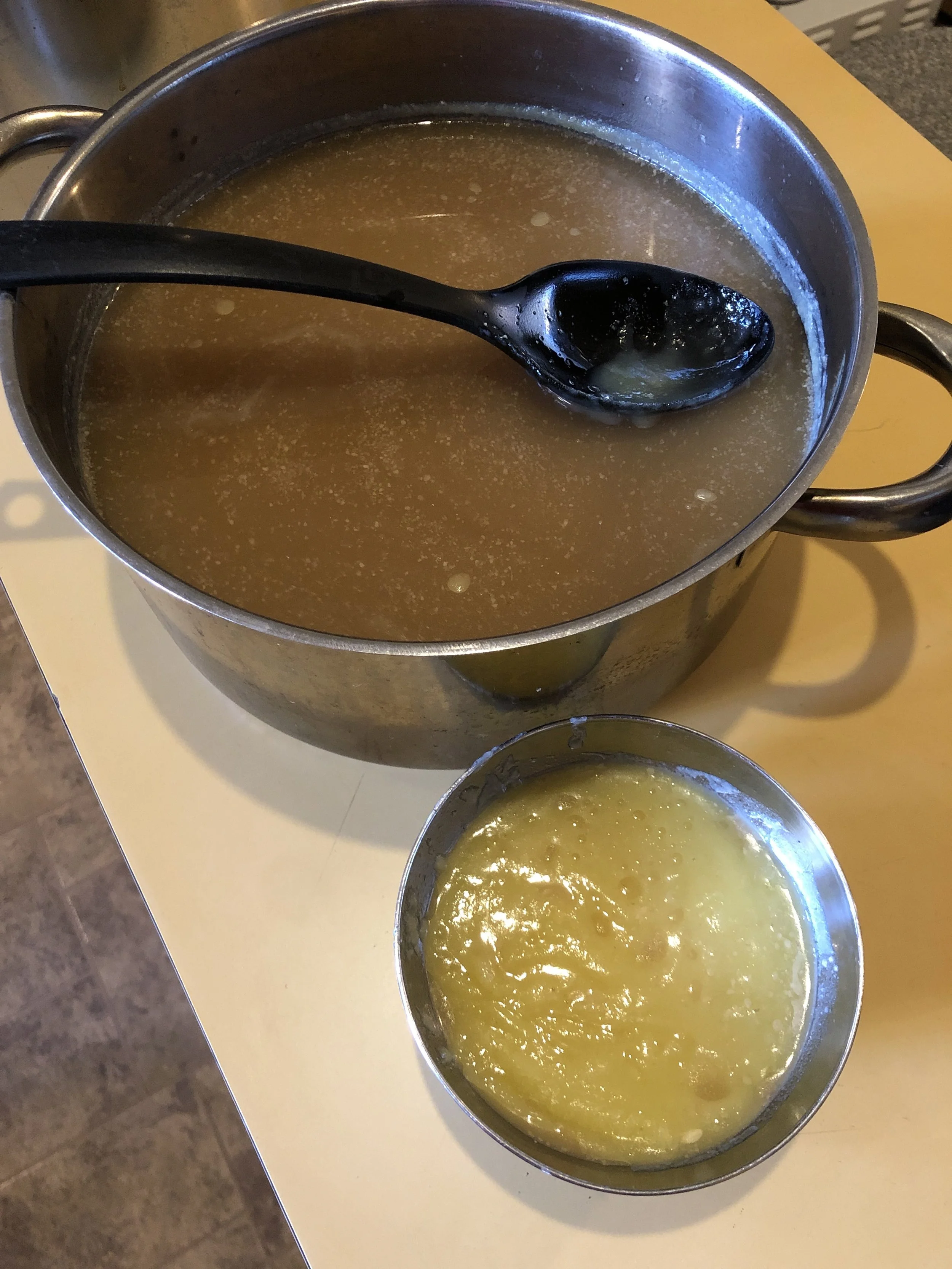
Fat’s off
And at this point, you’re probably hankering to see the end product. Well, it’s coming up and if you’ve been to a ramen shop in Japan, you can see that d. did a pretty bang on job as an Aussie might say.
Here you go!
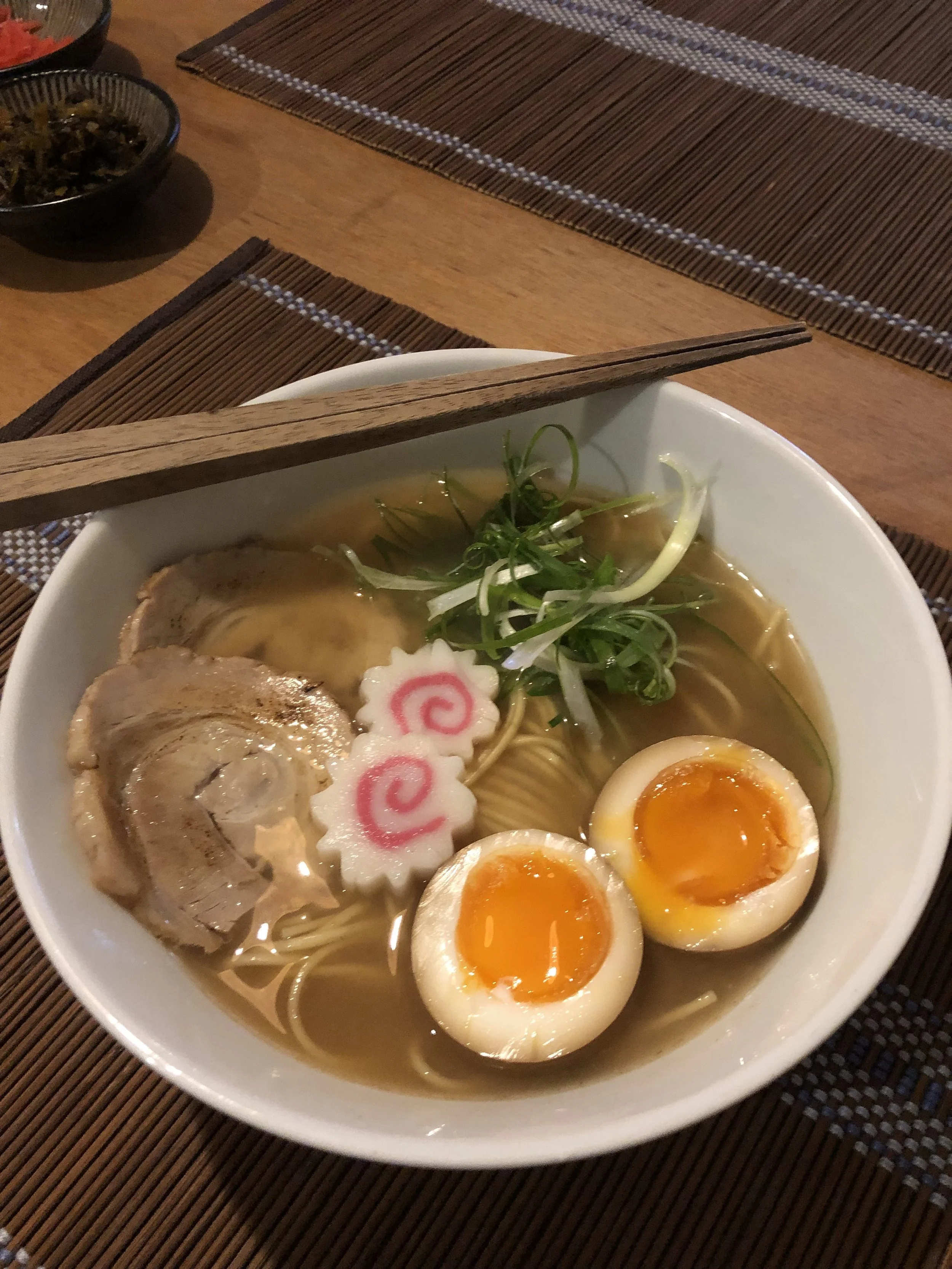
A couple things to note: d. didn’t photograph the egg making process but there’s plenty online if you’re interested. Anime fans will know but the white and pink swirly things are naruto (fish cake). Also, I’m not sure at what stage d. put it in, but also some miso in there. The color kind of tells but it would be hard to know without being told. He said he put in a little, so it might barely show up as a flavor. It’s what Japanese call kakushi-aji or hidden flavor or what we might call secret sauce (although in English fast-food workers have given that a bad connotation).